
A breach that didn’t begin where everyone expected
When news broke that Bank of Baroda was investigating a suspected data breach, the first assumption was almost inevitable: another bank, another cyberattack, another compromised core banking system.
But that wasn’t the story.
According to the bank’s official statement, its core banking infrastructure remained secure, and the incident was linked to a compromised employee email account rather than the systems responsible for processing customer transactions.
At first glance, that might sound reassuring.
- No banking systems breached.
- No payment infrastructure compromised.
- No evidence of unauthorized transactions.
Yet, if you’re a CIO, CISO, CTO, or enterprise leader, this incident should make you pause.
Because today’s cyberattacks rarely begin with an organization’s most heavily protected systems.
They begin somewhere far more ordinary.
An email. A password. A compromised identity.
The financial & insurance sector is a favourite for attackers! Since 2022 to 2026, 3809 incidents have occurred among which 1,300 are confirmed with complete data disclosure. 88% of breaches have happened due to external factors while 12% have happened due to internal factors.
And that’s exactly why the Bank of Baroda incident deserves attention, not as another banking headline, but as a reminder that in modern cybersecurity, attackers don’t always break through the front door. They simply find the side entrance you’ve overlooked.
What actually happened?
Initial reports indicate that customer-related information allegedly surfaced online, prompting Bank of Baroda to launch an internal investigation. While cybersecurity researchers raised concerns over exposed customer data, the bank clarified that its core banking systems remained unaffected and emphasized that customer deposits and banking operations were secure.
Whether the investigation ultimately confirms the extent of the breach is almost secondary.
The bigger lesson lies elsewhere.
Attackers didn’t need to penetrate one of India’s largest banking infrastructures. A single compromised communication channel had the potential to trigger a nationwide cybersecurity conversation.
That alone should concern every enterprise.
Because most organizations spend years strengthening their infrastructure while unknowingly leaving their identities, email accounts, and collaboration tools significantly less protected.
Why “our core systems are secure” is no longer enough
For years, cybersecurity strategies revolved around one principle:
Protect the network. Build stronger firewalls.
Secure the data centre. Harden the servers.
While these measures remain essential, today’s attackers have evolved.
Instead of targeting heavily fortified infrastructure, they increasingly focus on people.
Why?
Because compromising an employee account often requires far less effort than breaking into enterprise systems.
A stolen password can provide access to sensitive emails.
A compromised mailbox can expose customer records.
An employee’s identity can become the bridge into critical business applications.
In many cases, attackers don’t hack systems.
They simply log in.
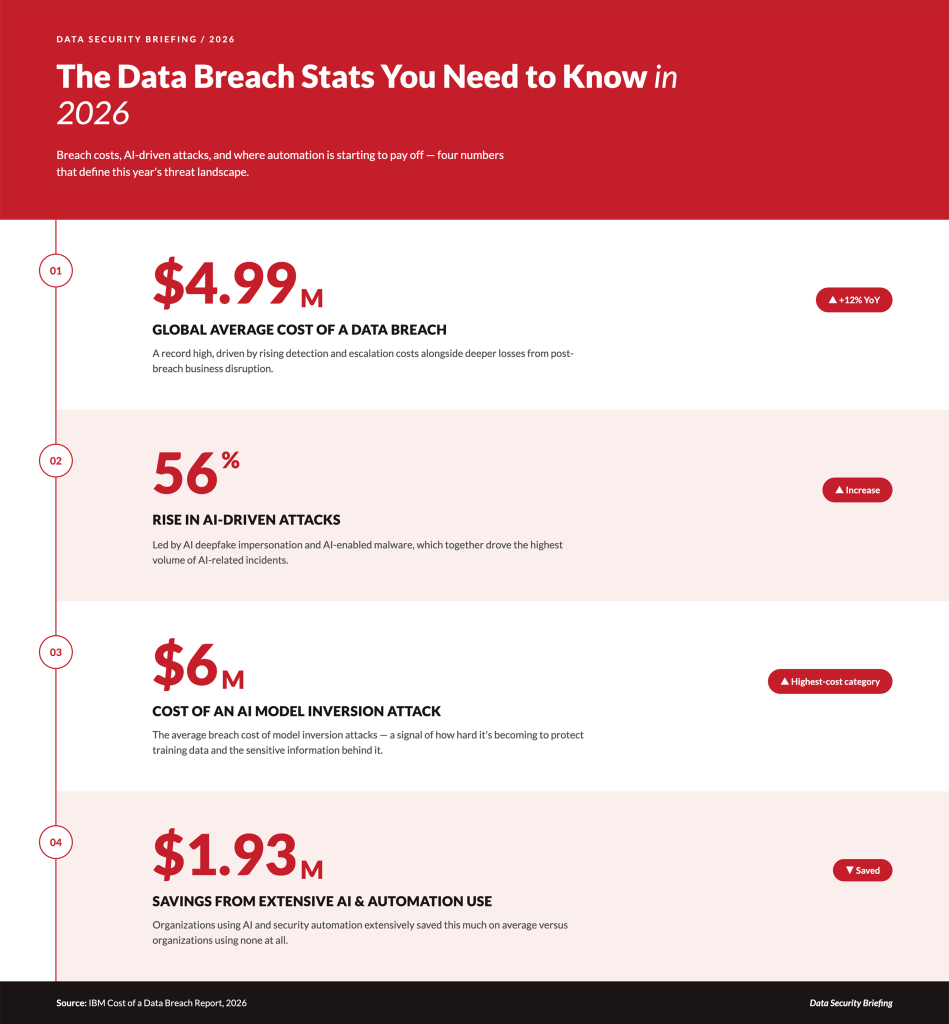
Source:IBM Cost of a Data Breach Report, 2026
Identity has become the new security perimeter
Enterprise IT has changed dramatically over the past decade.
Employees work remotely.
Applications have moved to the cloud.
Teams collaborate through Microsoft 365, Google Workspace, Slack, Teams, Zoom, and countless SaaS platforms.
The traditional security perimeter no longer exists.
Identity has replaced it.
Every login, authentication request, privileged account, shared mailbox, and cloud application now represents a potential attack surface. Cybercriminals understand this shift remarkably well. That’s why credential theft, phishing, Business Email Compromise (BEC), session hijacking, and identity-based attacks continue to grow year after year.
This makes incidents like Bank of Baroda less surprising and far more predictable.
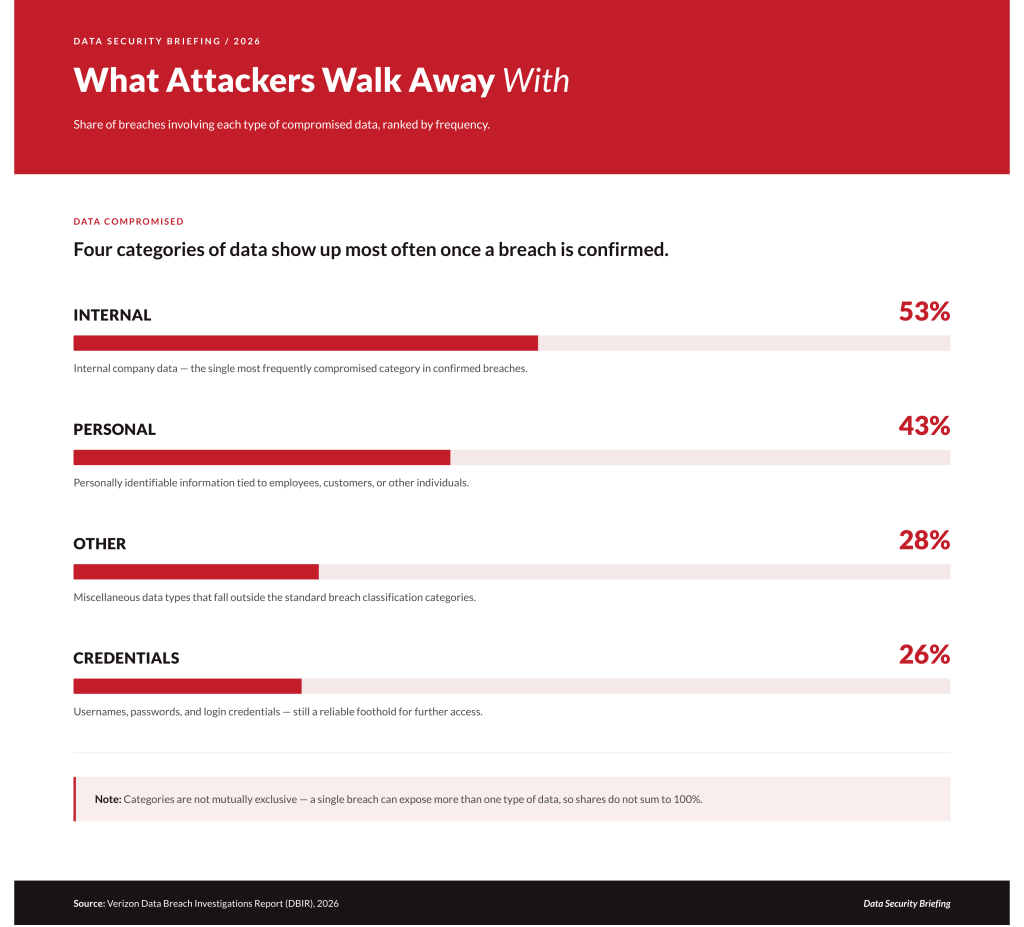
Source: Verizon Data Breach Investigations Report (DBIR), 2026
How AI Is Changing the Rules of Cybersecurity
The cyberattacks making headlines today are no longer the same ones organizations were defending against five years ago.
Artificial intelligence has fundamentally shifted the balance between attackers and defenders. Tasks that once required technical expertise, time, and manual effort can now be automated, scaled, and executed with alarming precision.
Phishing emails are a prime example. Instead of poorly written messages riddled with spelling mistakes, cybercriminals can now use generative AI to create convincing emails tailored to a specific organization, executive, or employee. These messages mimic writing styles, reference real projects, and even incorporate publicly available information to appear authentic.
The result? Employees are no longer spotting obvious scams, they’re being asked to identify sophisticated impersonation attempts that can be difficult to distinguish from legitimate business communications.
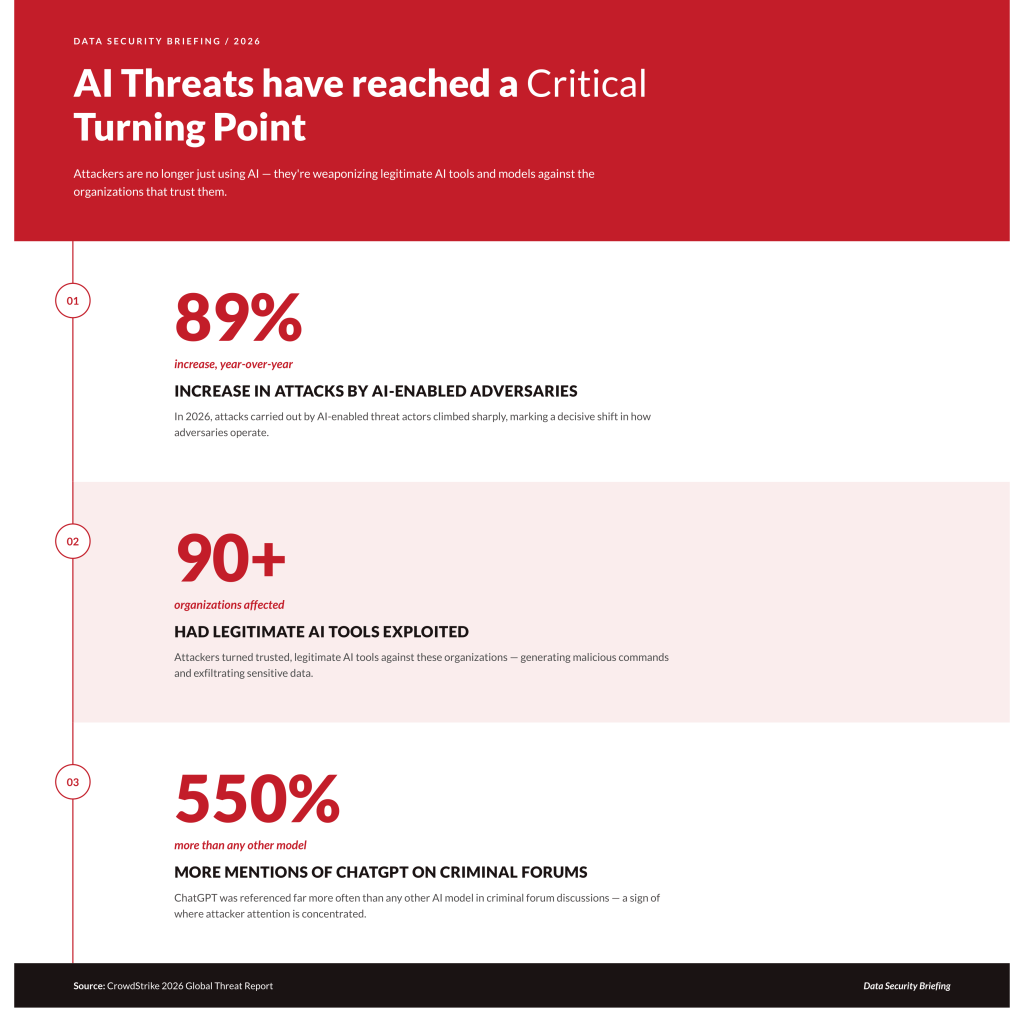
Source: CrowdStrike 2026 Global Threat Report
But phishing is only one piece of the puzzle.
AI is also accelerating malware development, helping attackers identify software vulnerabilities faster, automate reconnaissance, generate convincing fake documents, and even produce deepfake audio or video capable of impersonating senior executives during financial approvals or confidential discussions.
Imagine receiving a phone call that sounds exactly like your CEO requesting an urgent transfer of funds or a video meeting where a familiar face asks you to share sensitive customer data. These scenarios are no longer theoretical; they are becoming a reality as AI-powered social engineering techniques continue to evolve.
This is why the Bank of Baroda incident should not be viewed in isolation.
Whether the initial compromise involved AI or not, every organization now operates in an environment where attackers have access to tools that make cyberattacks faster, more personalized, and significantly harder to detect.
The traditional approach of relying solely on passwords, antivirus software, and periodic security awareness training is no longer enough.
Organizations must combine robust identity management, Zero Trust architecture, AI-powered threat detection, continuous monitoring, and regular employee education to stay ahead of increasingly intelligent threats.
In the age of AI, cybersecurity is no longer just about keeping attackers out. It’s about anticipating how quickly they can adapt and ensuring your defenses evolve even faster.
The hidden cost isn’t always financial
When organizations discuss cyber incidents, financial loss often dominates the conversation.
But money is only one part of the equation.
The real damage frequently comes from something much harder to recover.
Trust.
Customers trust banks with their savings.
Patients trust hospitals with their medical history.
Enterprises trust technology providers with intellectual property.
Once confidence begins to erode, rebuilding it can take years.
Beyond customer confidence comes regulatory scrutiny, legal obligations, operational disruption, internal investigations, and reputational impact.
Even when systems remain operational, the business may still experience significant disruption.
Where Brilyant Can Help
Cyber threats continue to evolve, but so should your security strategy. Whether you’re strengthening identity security, implementing a Zero Trust framework, securing endpoints, protecting email, or assessing vulnerabilities across your IT environment, Brilyant helps enterprises build a more resilient security posture.
Our Network & Security experts work with organizations to identify risks, close security gaps, and design integrated security architectures that protect users, devices, applications, and data. Because in today’s threat landscape, cybersecurity isn’t just about preventing attacks, it’s about ensuring your business can detect, respond to, and recover from them with confidence.
Looking to strengthen your organization’s cybersecurity posture? Connect with Brilyant’s security specialists to explore how we can help you build a proactive, resilient, and future-ready security strategy.