88% of organizations now report using AI in at least one business function in 2025, and 70% use Generative AI in at least one business function. This rapid adoption makes governance and oversight more important than ever.
For the last two years, the conversation around Artificial Intelligence has been dominated by one question.
“How fast can we adopt AI?”
Today, that question is changing.
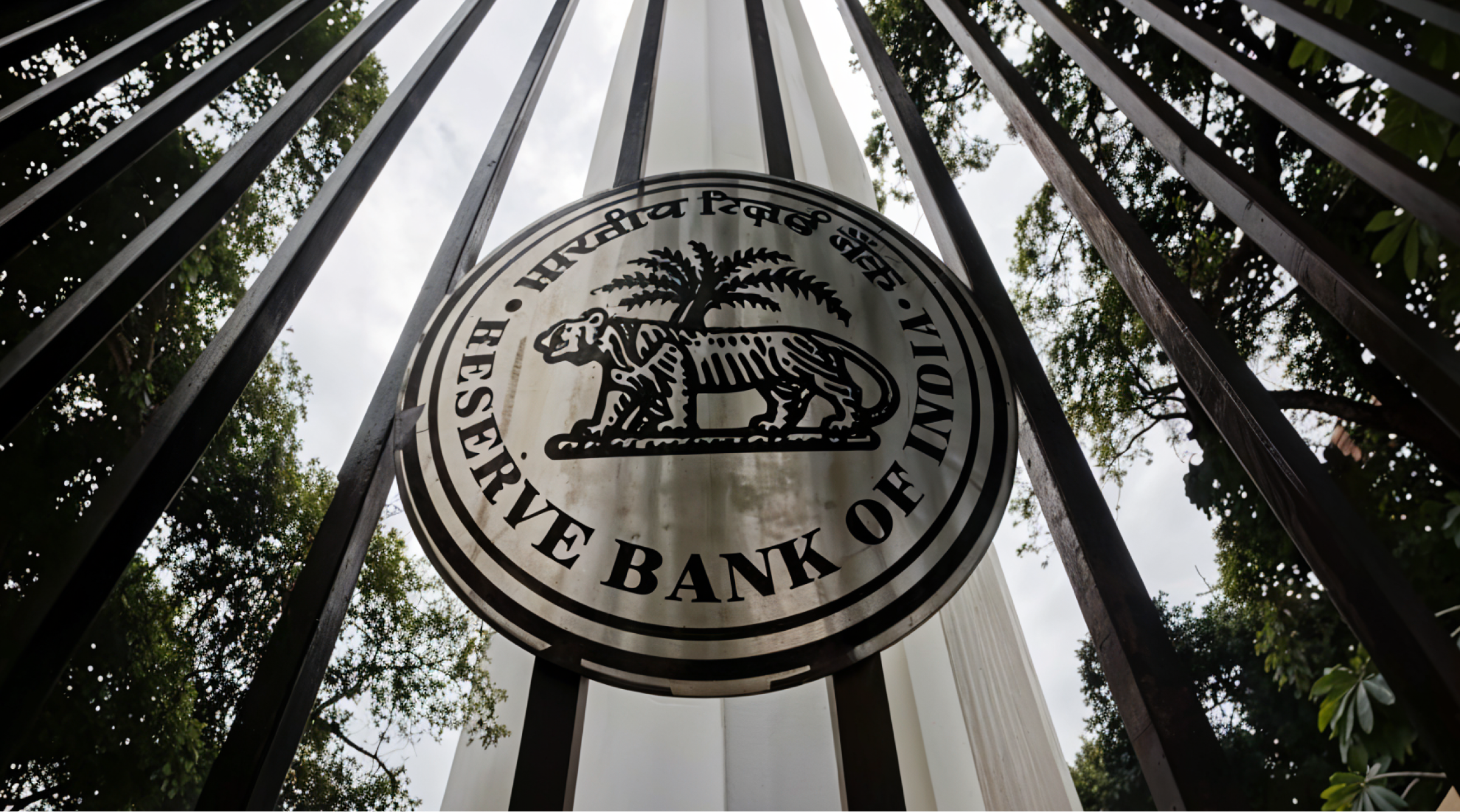
The Reserve Bank of India’s recently released FREE-AI (Framework for Responsible and Ethical Enablement of Artificial Intelligence) report signals the beginning of a new chapter, one in which success will not be measured by how quickly organizations deploy AI, but by how responsibly they govern it.
At first glance, the report appears to be written exclusively for banks, financial institutions, and fintech companies.
Look closer, however, and it becomes clear that RBI has done something much bigger.
It has created one of India’s most comprehensive governance frameworks for enterprise AI.
While the report focuses on regulated financial entities, the challenges it addresses are universal.
- How do organizations ensure AI decisions are fair?
- Who is accountable when AI gets it wrong?
- How should businesses manage third-party AI models?
- How do enterprises balance innovation with privacy, cybersecurity, compliance, and customer trust?
These are no longer banking questions, but enterprise questions.
For CIOs, CTOs, CISOs, and business leaders, the FREE-AI Framework is not just another regulatory document.
It is an early blueprint for how responsible AI will be governed across industries in the years ahead.
Why RBI Felt the Need to Act
Artificial Intelligence is transforming financial services faster than any previous technology wave. For example:
- Banks are using AI to detect fraud in real time.
- Financial institutions are automating customer support.
- Credit decisions increasingly rely on machine learning.
- Risk models are becoming more intelligent.
- Operations are becoming more autonomous.
The opportunities are enormous.
So are the risks.
Recognizing this, the RBI constituted a committee to study AI adoption in the financial sector and recommend a governance framework that encourages innovation while safeguarding customers, institutions, and the financial ecosystem.
The result is the FREE-AI Framework, a comprehensive report built around six foundational pillars, seven guiding principles, and twenty-six recommendations for responsible AI adoption.
This is an important distinction.
The report is not anti-AI.
In fact, it strongly encourages AI-driven innovation.
What RBI is advocating is governed innovation, where AI is deployed with transparency, accountability, security, and human oversight built in from the start.
That is a message every enterprise should pay attention to.
The Biggest Shift Isn’t AI. It’s Accountability
As per IBM’s Cost of a Data Breach Report 2026 – The AI tipping point, 63% of organizations either don’t have an AI governance policy or are still developing one, highlighting a significant gap between AI adoption and responsible oversight.
One of the most powerful themes running through the FREE-AI Framework is that AI governance cannot remain an IT responsibility.
It must become a business responsibility.
Historically, technology decisions were often delegated to IT teams.
AI changes that equation.
When AI influences lending decisions, hiring recommendations, cybersecurity responses, financial forecasts, or customer interactions, the consequences extend far beyond technology.
They affect business outcomes, customer trust, regulatory compliance, and corporate reputation.
That is why the RBI emphasizes governance structures involving boards, senior management, cross-functional oversight, and clearly defined accountability. AI cannot operate in isolation. It must be embedded within an organization’s broader governance and risk management framework.
Interesting Stat: 97% of organizations that experienced an AI-related security incident lacked proper AI access controls.
Source: IBM Cost of a Data Breach Report 2025
This is perhaps the report’s most significant message.
AI is no longer just another technology investment. It is becoming a governance priority.
From AI Pilots to Enterprise AI
Many organizations today have successfully experimented with AI.
Far fewer have successfully operationalized it.
The difference lies in the foundation.
Enterprise AI is not built on large language models alone.
It requires modern infrastructure, secure endpoints, identity and access management, data governance, cybersecurity, compliance frameworks, continuous monitoring, and well-defined operating models.
Without these elements, even the most promising AI initiatives struggle to scale beyond isolated use cases.
This is where the FREE-AI Framework offers valuable guidance.
Its recommendations encourage organizations to think beyond individual AI projects and instead develop enterprise-wide governance capabilities that support long-term adoption.
What This Means for Indian Enterprises
Although the FREE-AI Framework currently applies to the financial sector, history suggests that governance models developed for regulated industries often influence broader enterprise practices.
Cybersecurity frameworks followed a similar path.
Privacy regulations did the same.
AI governance is likely to follow suit.
Organizations that begin strengthening governance today will be significantly better positioned as regulations evolve, customer expectations rise, and AI becomes deeply embedded in everyday business operations.
The need for proactive action is already evident in India. According to IBM’s Cost of a Data Breach Report 2025, only 37% of Indian organizations have implemented AI access controls, while nearly 60% either don’t have AI governance policies or are still developing them.
This highlights a significant gap between AI adoption and AI governance, reinforcing why frameworks such as RBI’s FREE-AI are both timely and necessary for enterprises looking to scale AI responsibly.
The question is no longer whether enterprises will need AI governance.
The only question is whether they will build it proactively or wait until it becomes a regulatory requirement.
From AI Ambition to AI Readiness: How Brilyant Helps Enterprises Prepare
The RBI’s FREE-AI Framework sends a clear message. Responsible AI isn’t achieved by deploying a powerful model. It’s built on the right strategy, governance, security, and technology foundation.
For many enterprises, that’s where the real challenge begins.
AI initiatives often start within individual business units, but scaling them across the organization requires much more than technical expertise. It calls for modern infrastructure, secure endpoints, robust identity and access management, resilient cloud environments, strong cybersecurity, and governance frameworks that ensure AI remains transparent, accountable, and compliant.
The business case for investing in secure AI foundations is equally compelling. According to the IBM Cost of a Data Breach Report 2025, organizations that extensively used AI and automation within their security operations saved an average of USD 1.9 million per data breach compared to those that did not.
This demonstrates that AI governance and cybersecurity are not just about reducing risk. They also deliver measurable business value by improving resilience and lowering the financial impact of security incidents.
This is where Brilyant partners with enterprises.
Our approach goes beyond AI implementation. We help organizations assess their AI readiness, identify high-impact use cases, modernize IT infrastructure, strengthen cybersecurity, and build the governance foundations required to scale AI responsibly. Whether it’s enabling secure digital workplaces, optimizing cloud and data center environments, implementing enterprise device management, or providing strategic AI consulting, our focus is on helping businesses adopt AI with confidence.
As the RBI framework rightly emphasizes, AI governance is not a one-time compliance exercise. It’s an ongoing capability that must evolve alongside technology and business needs.
For enterprises, the journey to responsible AI starts long before the first model goes live. It starts with building an IT ecosystem that’s secure, scalable, and ready for what’s next.
Final Thought
The RBI’s FREE-AI Framework is more than a policy document for banks.
It is India’s clearest signal yet that AI governance has entered the mainstream. For enterprise leaders, this is an opportunity to move beyond experimentation and begin building AI ecosystems that are resilient, transparent, and future-ready.
Technology will continue to evolve. Regulations will continue to mature. Customer expectations will continue to rise.
Organizations that treat governance as a strategic enabler, rather than a compliance exercise, will be the ones that lead the next era of enterprise AI.
Get in touch with our experts to learn more about how we can empower your enterprise using our AI offerings.